



Sensitive teeth shouldn’t keep you from smiling confidently. Many people hold back from whitening because they fear pain, but the good news is that teeth whitening for sensitive teeth is not only possible, it’s increasingly safe and effective with the right approach. That’s why, in this guide, we will explain everything that can help patients with sensitivity achieve noticeable results without discomfort.
Is Teeth Whitening Bad For Your Teeth?
This is one of the most common questions we hear, and the honest answer is: not when done correctly. The bleaching agents used in teeth whitening, typically hydrogen peroxide or carbamide peroxide, work by penetrating the enamel and breaking down the compounds that cause discoloration in the underlying dentine.
This same penetration process can temporarily cause the nerve endings inside the tooth to become more reactive, leading to sensitivity. However, this is temporary and manageable.
Is Teeth Whitening Bad For Your Teeth In The Long Run?
No, especially when supervised by a qualified dentist who tailors the treatment to your sensitivity level.
What Causes Tooth Sensitivity During Teeth Whitening?
When whitening materials containing hydrogen peroxide are used, they may penetrate the enamel and reach the dentin layer, causing irritation to nerve endings.
Common causes of pre-existing sensitivity that can make whitening more uncomfortable include:
- Enamel erosion from acidic foods and drinks, gum recession exposing the root surface, dentine hypersensitivity, worn enamel from tooth grinding, or cracked and chipped teeth.
- It is common to feel a temporary increase in tooth sensitivity after whitening, especially when using techniques not designed for sensitive teeth.
Teeth Whitening for Sensitive Teeth ( 5 Options)
Finding the best teeth whitening for sensitive teeth depends on your level of sensitivity and your dentist’s recommendations. Here are the main options:
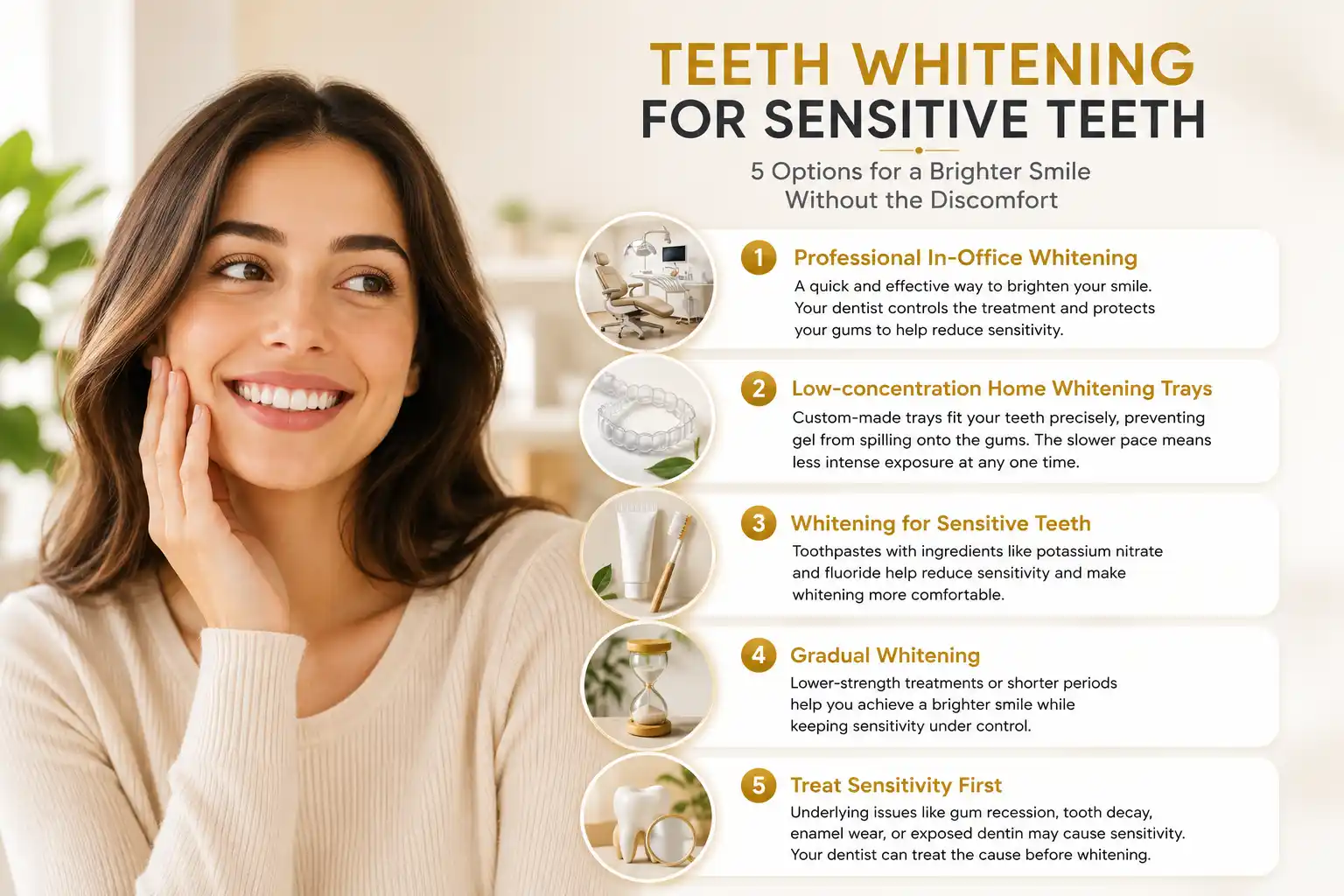
1. Professional In-Office Whitening
This is a quick way to brighten your smile, as your dentist can control the whitening treatment and protect your gums to help reduce sensitivity.
2. Low-concentration home whitening trays:
The trays are custom-made to fit your teeth precisely, which prevents the gel from spilling onto the gums and causing irritation. The slower pace of home whitening means less intense exposure at any one time.
3. Whitening for Sensitive Teeth
If you have sensitive teeth, your dentist may recommend a toothpaste specifically designed to help reduce sensitivity. Ingredients such as potassium nitrate and fluoride can help make your teeth more comfortable and may be useful before or during a whitening treatment.
4. Gradual Whitening
You don’t always need to whiten your teeth all at once. Using a lower-strength treatment or whitening for shorter periods can help you achieve a brighter smile while keeping sensitivity under control.
5. Treat Sensitivity First
If your teeth are very sensitive, there may be an underlying reason, such as gum recession, tooth decay, enamel wear, or exposed dentin. Your dentist can check the cause and treat it before starting whitening.
Professional Teeth Whitening for Sensitive Teeth vs. At-Home Treatments
Professional teeth whitening for sensitive teeth offers significant advantages over at-home kits. In-clinic whitening uses hydrogen peroxide or carbamide peroxide with concentrations ranging from 15% to 40%, and although it is the strongest available treatment, it is the safest, as it is performed by a professional once or twice a year only.
Over-the-counter whitening strips and kits bought online use a one-size-fits-all approach with no adjustment for individual sensitivity levels, and the trays or strips are not custom-fitted, which means the gel can easily contact the gums and cause additional irritation.
Read Also: Professional Teeth Whitening Cost
The Table Below Sums Up Your Options Clearly:
Option | Sensitivity Risk | Best For |
| OTC strips/kits | Moderate – High | Mild staining, low sensitivity |
Dentist home trays | Low – Moderate | High sensitivity, gradual results |
| In-chair (standard) | Moderate – High | Fast results, moderate sensitivity |
In-chair (modified protocol) | Low – Moderate | High sensitivity, fast results |
How to Reduce Sensitivity After Teeth Whitening
To manage post-whitening sensitivity comfortably: use a sensitive toothpaste immediately after treatment and for at least a week afterwards, avoid very hot or very cold food and drinks for 48 hours, avoid highly acidic foods for 24-48 hours, and use a soft-bristled toothbrush with a gentle brushing technique.
Taking breaks between whitening sessions can also provide relief. If you notice signs of increased sensitivity or discomfort during whitening, taking a break for a few days gives your teeth time to recover and adapt, ensuring a more comfortable experience overall.
Read Also: What Can You Eat After Teeth Whitening?
Ingredients to Look for in Teeth Whitening Products for Sensitive Teeth
Knowing what to look for helps you choose the best teeth whitening for sensitive teeth on the market.
It’s best practice for people with sensitive teeth to go low and slow, meaning use a low-concentration gel over 3-4 weeks for shorter application time, even skipping days to reduce sensitivity.
Key Ingredients To Seek Out:
1. Potassium Nitrate or Stannous Fluoride:
These work by blocking the dentinal tubules: the tiny channels in the dentine that transmit pain signals, which reduces sensitivity both during and after whitening.
2. Hydroxyapatite:
Products containing hydroxyapatite can help strengthen and remineralise the enamel during and after whitening, and applying a remineralising gel after each session can noticeably reduce post-treatment sensitivity.
3. Carbamide peroxide:
Carbamide peroxide has more of an extended release approach and is gentler on the nerves than hydrogen peroxide, requiring about 4 to 6 hours of contact time.
Who Should Avoid Teeth Whitening?
Teeth whitening is not recommended if there is a cavity or inflammation of the gums, and whitening is less effective when the original color of the teeth is gray. It may be necessary to use special trays to take home in such cases.
Patients with chronic tooth sensitivity should address the underlying cause before considering whitening. If sensitivity is caused by gum recession, enamel erosion, or tooth grinding, a dentist may recommend treating these conditions first.
Why Choose Ivory Dental Clinics for Teeth Whitening for Sensitive Teeth
At Ivory, teeth whitening for sensitive teeth is not a one-size-fits-all service.
We perform a comprehensive assessment to determine the safest whitening treatment for your level of tooth sensitivity.
If you’re looking for teeth whitening for sensitive teeth near me or comparing teeth whitening for sensitive teeth prices, our team will recommend the most suitable option based on your needs and budget.
We use professional-grade whitening systems, customized treatment protocols, and desensitizing agents to maximize comfort and minimize sensitivity.
Our personalized approach helps you achieve a brighter smile with safe, long-lasting results.
Conclusion
Teeth whitening for sensitive teeth is absolutely achievable; it just requires the right guidance, the right products, and a dentist who understands your needs. It is always important to have a dental assessment before starting any whitening treatment, so your dentist can check for any underlying issues that might make sensitivity worse.
At Ivory, we’re here to make that journey smooth, comfortable, and worth it. Book a consultation with Ivory today; because a brighter smile shouldn’t come with pain.
FAQs About Teeth Whitening for Sensitive Teeth
1. Is Teeth Whitening Bad For Your Teeth If They’re Already Sensitive?
Not when done properly. With the right approach of lower concentrations, longer intervals between applications, and desensitising products, patients with sensitivity can still achieve a noticeably brighter smile safely and comfortably.
2. What Is The Best Teeth Whitening For Sensitive Teeth?
Dentist-prescribed home whitening trays with a lower concentration of bleaching gel are often the most comfortable starting point for sensitive patients. Peroxide-free options using natural ingredients are also excellent alternatives.
3. What Is The Teeth Whitening For Sensitive Teeth Price at Ivory?
Pricing depends on the treatment type and your specific case. Contact Ivory directly for a personalized quote after your consultation.
4. How Long Do Whitening Results Last With Sensitive Teeth?
Whitening results for sensitive teeth usually last from 6 months to a year, depending on diet and daily habits.
5. Can I Whiten My Teeth If I Have Fillings?
Yes, teeth whitening can be performed with fillings present, but fillings do not change color like natural teeth. They may need to be replaced after whitening to match the new tooth color.
6. Should I Stop Whitening If Sensitivity Increases?
If your teeth become sensitive, it’s best to stop any whitening products immediately and consult your dentist if the sensitivity or discomfort persists. If the sensitivity is mild, you can experiment with shorter applications or reduce how often you use the product.