



What causes a root canal? This is one of the most common questions asked in dental clinics and a concern for many patients. Root canal treatment is often the best option for preserving the natural tooth instead of extracting it when the tooth pulp or root becomes damaged or infected.
Therefore, in the following sections, we will review the most important factors that can negatively affect the tooth pulp, the common signs and symptoms that may indicate damage or infection, and how these issues can be treated to maintain the health and safety of your mouth and teeth.
What Causes a Root Canal (11 Common Reasons)
There are several reasons related to the necessity of following an effective treatment plan to get rid of tooth nerve pain, the most prominent of which are the following:
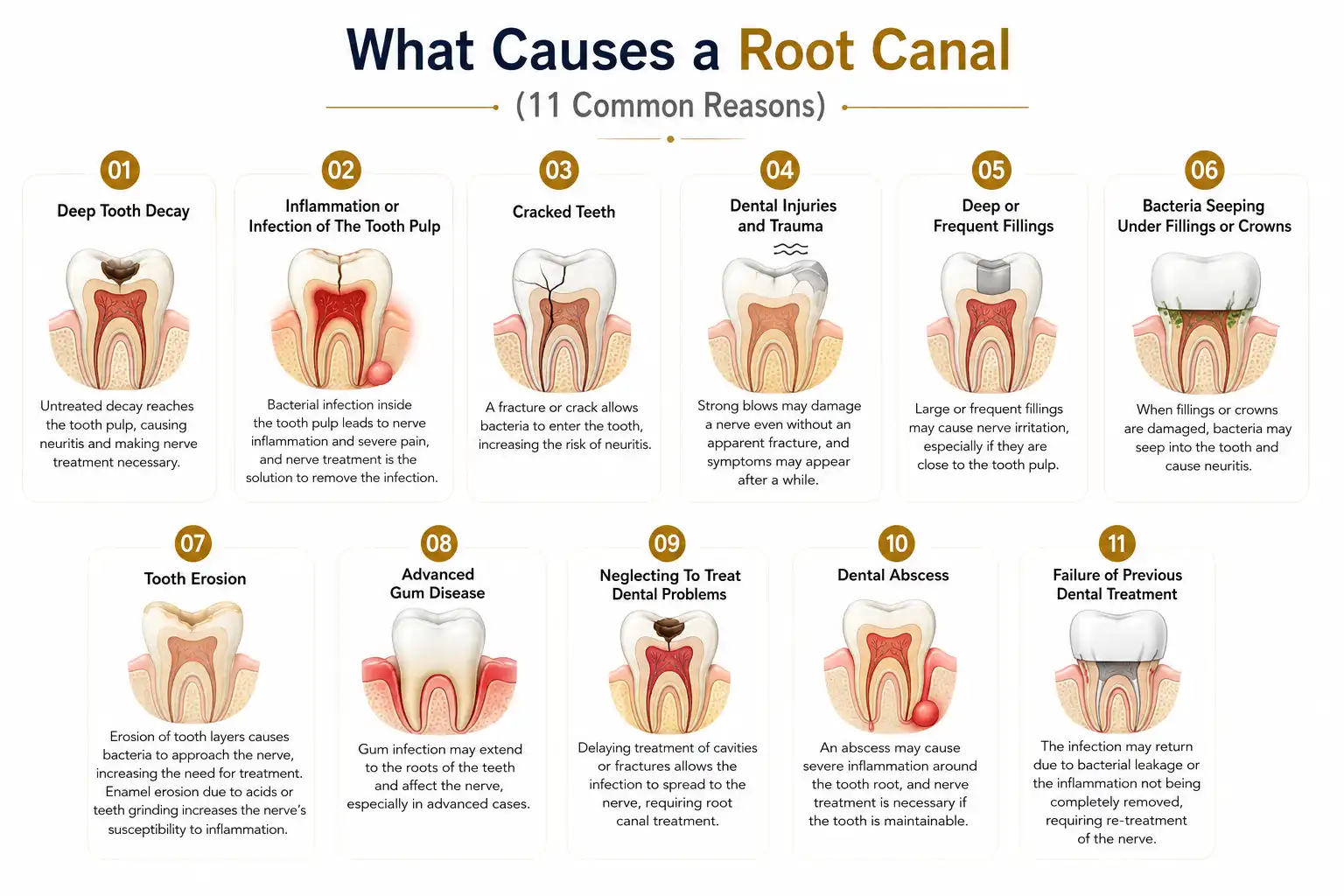
1. Deep Tooth Decay
Untreated decay reaches the tooth pulp, causing neuritis and making nerve treatment necessary to preserve the tooth.
2. Inflammation or Infection of The Tooth Pulp
Bacterial infection inside the tooth pulp leads to nerve inflammation and severe pain, and nerve treatment is the solution to remove the infection.
3. Cracked Teeth
A fracture or crack allows bacteria to enter the tooth, increasing the risk of neuritis.
4. Dental Injuries and Trauma
Strong blows may damage a nerve even without an apparent fracture, and symptoms may appear after a while.
5. Deep or Frequent Fillings
Large or frequent fillings may cause nerve irritation, especially if they are close to the tooth pulp.
6. Bacteria Seeping Under Fillings or Crowns
When fillings or crowns are damaged, bacteria may seep into the tooth and cause neuritis.
7. Tooth Erosion
Erosion of tooth layers causes bacteria to approach the nerve, increasing the need for treatment, and enamel erosion due to acids or teeth grinding increases the nerve’s susceptibility to inflammation.
8. Advanced Gum Disease
Gum infection may extend to the roots of the teeth and affect the nerve, especially in advanced cases.
9. Neglecting To Treat Dental Problems
Delaying treatment of cavities or fractures allows the infection to spread to the nerve, requiring root canal treatment.
10. Dental Abscess
An abscess may cause severe inflammation around the tooth root, and nerve treatment is necessary if the tooth is maintainable.
11. Failure of Previous Dental Treatment
The infection may return due to bacterial leakage or the inflammation not being completely removed, requiring re-treatment of the nerve.
Read Also: Can a Tooth Infection Affect Your Eyes?

How Does a Tooth Become Infected?
We can say by talking about what causes a root canal tooth can become infected when bacteria penetrate the outer layer and reach the inner pulp, which contains blood vessels and nerves. The infection goes through several basic stages, which we will mention below:
Bacteria Penetrate The Outer Layers of The Tooth
Bacteria penetrate the outer layers of the tooth until they reach the inner core through the cavity or hole resulting from tooth decay.
Inflammation of The Inner Pulp of The Teeth
An interaction between a bacterial infection and nerve tissue results in inflammation of the nerve chamber, increasing pressure on the nerve and causing swelling and severe pain.
Tooth Nerve Death
The tooth nerve death stage occurs when treatment is neglected for a long time and timely medical intervention is not provided, leading to worsening inflammation, cessation of blood circulation, and death of the tooth nerve.
Abscess Formation
Dead bacteria are transmitted to the root canals of surrounding tissues, and the infection is also transmitted to the jawbone, causing an abscess to appear, pus to collect, and swelling of the gums and face.
5 Common Signs You May Need a Root Canal
After we answered the question What causes a root canal, we are going to explain in detail the most common signs that result from inflammation and damage to the dental nerve:
1. Severe Toothache and Constant Pulse
Acute toothache with a constant pulse is one of the indicators that alert to the presence of infection and inflammation of the tooth root and nerve, and the pain and pulse increase with lying down and sleeping due to increased blood flow to the head, and the severity of the pain does not decrease with taking painkillers.
2. Allergy To Hot and Cold Drinks
If the patient feels severe pain and sensitivity while drinking hot or cold drinks, this is one of the signs that answers the question, What causes a Root Canal, as the pain continues for a long time after drinking, indicating that the dental nerve is severely inflamed and requires a medical examination.
3. Feeling Pain While Chewing Food
Upon contact with food, the patient feels severe pain or a feeling of strong pressure, which indicates that the inflammation has spread to the surrounding tissues, ligaments, and internal nerves, causing severe tooth sensitivity and difficulty chewing.
4. Swollen Gums and Abscess
As bacteria accumulate and the infection worsens, pus forms and an abscess appears; the gums and surrounding tissues swell, and the jaw and face swell, requiring immediate intervention to limit the spread of infection.
5. Dark or Gray Tooth Color
If the tooth nerve is exposed to inflammation and damage, or if the nerve dies, the passage of blood and nutrients stops, and the color of the tooth begins to change and become dark in color, and in some cases tends to black.
How Long Does a Root Canal Take?
A dental nerve treatment session usually takes 45 to 90 minutes, depending on the condition of the tooth and the number of root canals.
In simple cases, treatment can be completed in one session, while in more complex cases, two or more sessions may be required to completely clean and fill the ducts.
How Is a Root Canal Performed in 5 Steps?
The Root Canal is performed as follows:
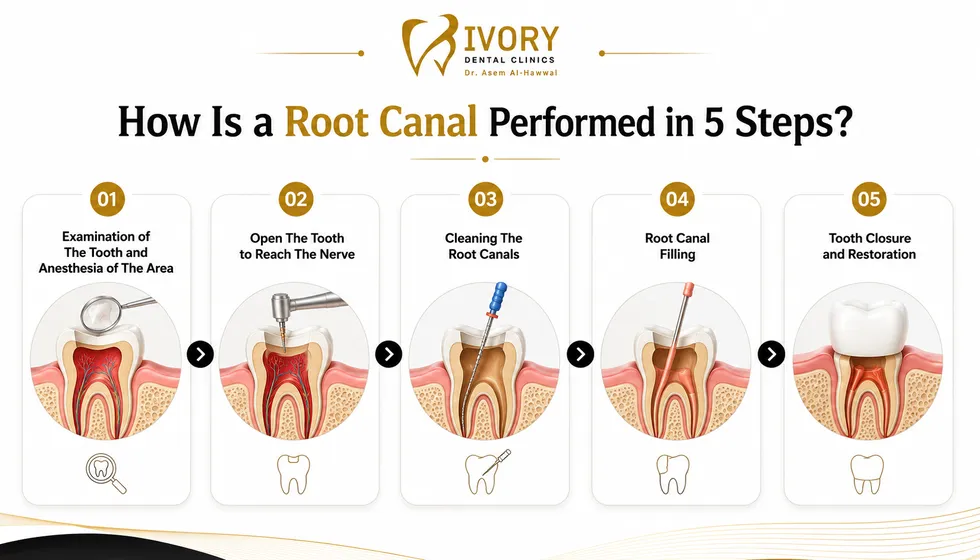
1. Examination of The Tooth and Anesthesia of The Area
The dentist examines the tooth, performs X-rays to determine the condition of the roots, and then uses local anesthesia to reduce pain during treatment.
This examination also helps identify the underlying cause of the problem and evaluate what causes a root canal by symptoms .
2. Open The Tooth to Reach The Nerve
The doctor makes a small opening at the top of the tooth to access the root canals and remove the affected nerve.
3. Cleaning The Root Canals
The ducts are cleaned of inflamed tissue and bacteria using specialized tools and thoroughly sterilized.
4. Root Canal Filling
After ensuring that the channels are clean, they are filled with a special medical substance to prevent bacteria from entering again.
5. Tooth Closure and Restoration
The tooth is closed with a permanent filling, or a crown is installed if the tooth needs additional protection and restoration of its strength and function.
Read More About: Steps of Root Canal Treatment Procedure
Can a Root Canal Save Your Natural Tooth?
Yes, in most cases, dental nerve treatment helps preserve the natural tooth instead of extracting it. The success of treatment depends on the speed of intervention, the extent of tooth damage, and the condition of the surrounding bones.
After properly cleaning and filling the root canals and then restoring the tooth with a filling or crown when needed, the tooth can continue to perform its normal function for many years with good oral care and periodic follow-up with the dentist.
Why Choose Ivory Dental Clinics for Root Canal Treatment?
At Ivory Clinics, we are keen to provide dental nerve treatment safely and comfortably, paying attention to every step from diagnosis until the end of treatment.
Our dental care clinic‘s doctors use the latest equipment to accurately identify the problem and preserve the natural tooth as much as possible. We are also committed to applying the highest standards of sterilization and providing follow-up after treatment to ensure the best result and comfort for the patient until he fully recovers.
Don’t postpone your dental treatment and book your appointment today to get an accurate diagnosis and treatment that keeps your smile and teeth comfortable.
Conclusion
You will no longer be confused about the answer to this question: “What Causes a Root Canal?” because Dr. Asem Al-Hawwal will determine the cause of your condition through accurate diagnosis and following the appropriate treatment plan. It is necessary to be careful to follow all the doctor’s instructions to treat the problem early and visit the dentist regularly, as early diagnosis helps preserve the tooth and reduces the need for nerve treatment.
FAQs About Root Canal Treatment
1. What Happens If I Delay Root Canal Treatment?
Delaying root canal treatment can increase pain and allow the infection to spread deeper into the tooth and surrounding tissues. Over time, an abscess may develop, or the tooth may become too severely damaged to save, making extraction necessary. Seeking treatment as early as possible gives you the best chance of preserving your natural tooth.
2. When Does a Patient Recover After Root Canal Treatment?
Most patients recover enough to return to their normal daily activities within 2 to 3 days. Complete healing of the surrounding tissues usually takes up to 2 weeks, provided you follow your dentist’s aftercare instructions.
3. How Long Does a Root Canal Take?
Root canal treatment usually requires one to three appointments, depending on the condition of the tooth. Each session typically lasts between 30 and 60 minutes.
4. How Can You Avoid Needing a Root Canal?
You can reduce your risk of needing root canal treatment by maintaining good oral hygiene and taking care of your teeth. Here are some simple preventive tips:
- Brush your teeth twice a day with fluoride toothpaste.
- Floss your teeth daily.
- Limit sugary foods and drinks.
- Treat cavities and cracked teeth early.
- Visit your dentist regularly for checkups and cleanings.
- Replace damaged fillings or dental crowns when recommended.