


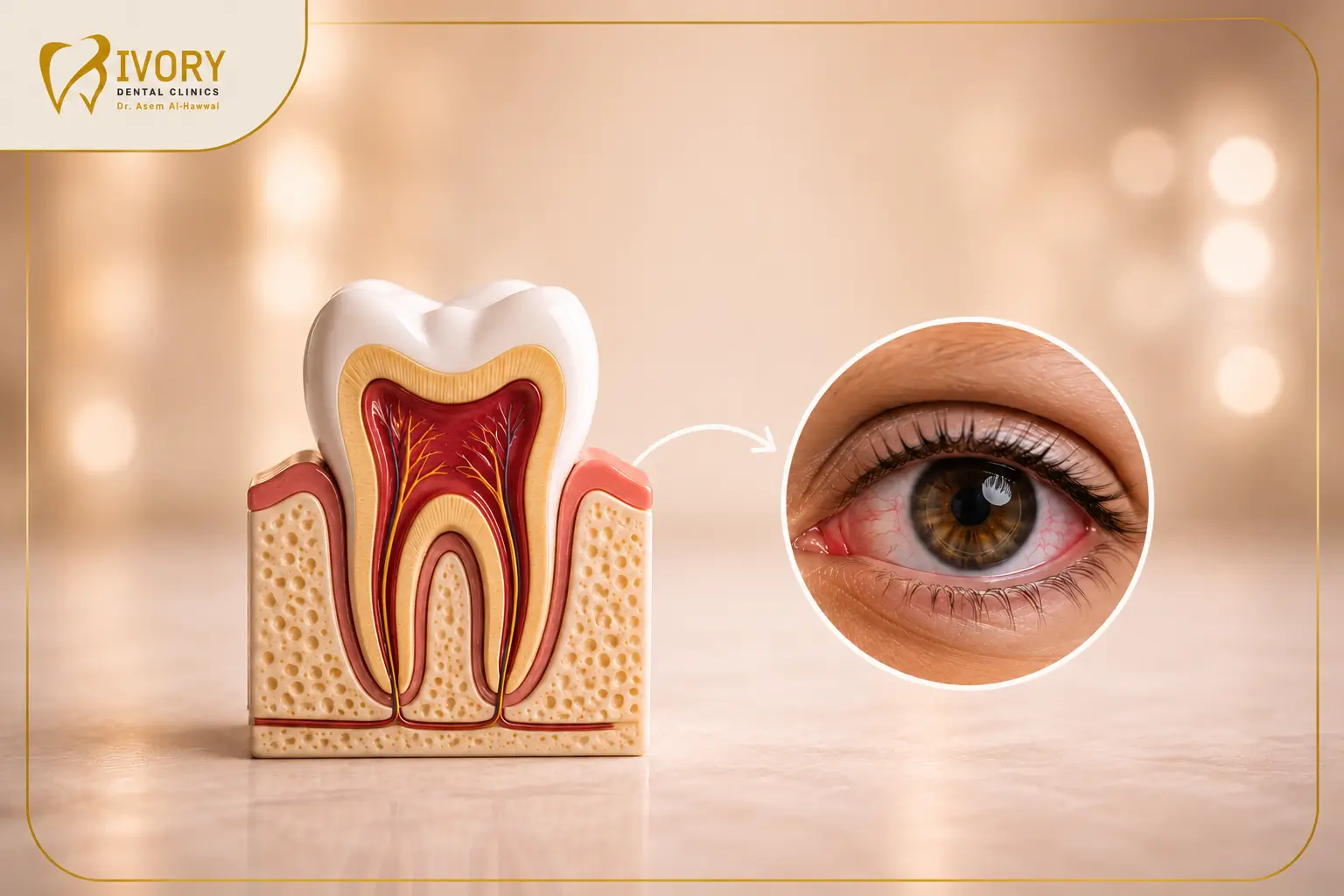
Can a tooth infection affect your eyes and cause severe, persistent pain? This is one of the most common questions dentists receive from patients with recurring tooth root infections. The pain often intensifies when the dental pulp becomes infected, leading to inflammation inside the tooth. In these cases, prompt treatment is essential to stop the infection and prevent it from affecting the surrounding tissues, including the eye.
In this article, we’ll explain the connection between tooth infections and eye pain, discuss how dental nerves are linked to nearby structures, and explore the best treatment options.
What Is a Tooth Nerve Infection?
A tooth nerve infection, medically known as pulpitis, occurs when the soft tissue inside the tooth (the dental pulp) becomes inflamed or infected. The pulp contains nerves and blood vessels that keep the tooth healthy.
Common causes of a tooth nerve infection include:
- Deep tooth decay
- A cracked or fractured tooth
- Repeated dental procedures
- Dental trauma or injury
As the inflammation progresses, pressure builds inside the tooth, causing severe, throbbing pain.
Can a Tooth Infection Affect Your Eyes?
Yes. A tooth infection can affect your eyes indirectly, especially when the infection develops in the upper teeth. Because the upper jaw is located close to the tissues surrounding the eye and shares nerve pathways, an infected tooth may cause symptoms such as eye pain, pressure, throbbing, or discomfort.
If the infection spreads beyond the tooth, it may also lead to headaches, facial pain, or swelling around the eyelid. Fortunately, once the dental infection is properly treated, these symptoms usually resolve.
Symptoms of a Tooth Infection That May Affect the Eye
If a tooth infection spreads or irritates nearby nerves, you may experience:
- Persistent pain around the affected eye
- Swelling of the cheek or lower eyelid
- Jaw pain and difficulty chewing
- A feeling of pressure or heaviness on the affected side of the face
- Headaches or difficulty concentrating caused by severe dental pain
When Does a Tooth Infection Become Dangerous to the Eye?
A tooth infection can become a serious medical concern if it is left untreated and the bacteria spread beyond the tooth. Warning signs include:
- Infection spreading from the tooth root to the tissues surrounding the eye
- Swelling of the eyelid or severe facial swelling that makes it difficult to open the eye
- Fever or elevated body temperature
- Redness of the eye or changes in vision
- Severe headache accompanied by worsening facial pain
If you experience any of these symptoms, seek dental care immediately. Early treatment can eliminate the infection, relieve pain, and help prevent serious complications.
Complications of Untreated Tooth Nerve Infection
Ignoring a tooth nerve infection can lead to serious complications and make treatment more difficult. As the infection progresses, it may spread beyond the tooth and affect nearby tissues.
Possible complications include:
- A dental abscess filled with pus, causing severe throbbing pain that may radiate to the eye
- Spread of the infection to the facial tissues, increasing the risk of cellulitis
- Bacteria can enter the bloodstream if the infection is left untreated
- Damage to the tissues supporting the tooth, leading to tooth mobility and, in severe cases, tooth loss
- Early treatment is the best way to prevent these complications and protect both your oral and overall health.
How Is a Tooth Nerve Infection Treated?
At Ivory Dental Clinics, we use advanced diagnostic tools and modern treatment techniques to eliminate infection, relieve pain, and preserve your natural tooth whenever possible.
1. Examination and Diagnosis
Your dentist will perform a comprehensive examination to determine the source of the pain and evaluate the condition of your tooth, gums, and surrounding tissues. Digital X-rays may also be taken to assess the root canals and identify the extent of the infection.
2. Root Canal Treatment
If the dental pulp is infected, root canal treatment is usually the most effective solution. The infected pulp is carefully removed, the root canals are cleaned and disinfected, and the canals are sealed to prevent reinfection. In many cases, a dental crown is placed afterward to restore the tooth’s strength and function.
If the tooth is severely damaged and cannot be saved, extraction may be recommended as a last resort.
3. Controlling the Infection
If the infection has spread or an abscess is present, your dentist may prescribe antibiotics. In some cases, the abscess may need to be drained to relieve pressure, reduce swelling, and stop the infection from spreading.
4. Pain Management
Over-the-counter pain relievers such as ibuprofen or acetaminophen can help reduce pain and inflammation. Rinsing with warm salt water may also soothe irritated gums and improve oral hygiene during recovery.
If the infection is causing facial swelling or pain that radiates toward the eye, applying a cold compress to the outside of the cheek may help reduce swelling and provide temporary relief.
When Do You Need Root Canal Treatment?
You may need root canal treatment if you experience any of the following:
- Severe or persistent tooth pain
- Swelling of the face or neck
- Prolonged sensitivity to hot or cold
- Tooth discoloration
- Significant swelling of the gums
Conclusion
So, can a tooth infection affect your eyes? The answer is yes. Although the eye itself is not usually infected, a severe tooth infection can spread to nearby tissues, causing pain, swelling, and other complications around the eye.
Seeking prompt dental care is the best way to stop the infection, relieve pain, and prevent more serious health problems. If you’re experiencing symptoms of a tooth infection, schedule an appointment with Ivory Dental Clinics today for an accurate diagnosis and effective treatment. Early intervention can help save your natural tooth and protect your overall health.
Frequently Asked Questions
1. Can Eye Pain Go Away After Treating a Tooth Infection?
Yes. If a tooth infection causes eye pain, it usually improves once the infection has been treated.
2. How Can Tooth Decay Affect the Eyes?
In severe cases, an untreated tooth infection may cause:
- Throbbing pain around the eye.
- Swelling of the cheek or eyelid.
- Blurred vision if the infection spreads to nearby tissues.
- Redness or irritation around the eye.
3. Can Dental Anesthesia Affect the Eye Nerve?
No. Dental anesthesia does not cause permanent damage to the eye nerve. In rare cases, temporary numbness or unusual sensations may occur, but they usually disappear as the anesthesia wears off.
4. What Happens if a Tooth Nerve Infection Is Left Untreated?
Without treatment, the infection can worsen, leading to a dental abscess, severe pain, swelling, and the spread of bacteria to nearby tissues or other parts of the body. Early treatment helps prevent these complications.